
Search
£12.99
Published
5 May 2026Hardback
9781913083908Ebook
9781917532228Press Release
Coming soon.By John-Paul Stonard:
‘A fascinating – and timely – reminder of how deeply tyrants hate and fear innovative art, and of how much of it survives them and their tawdry regimes’
JOHN BANVILLE
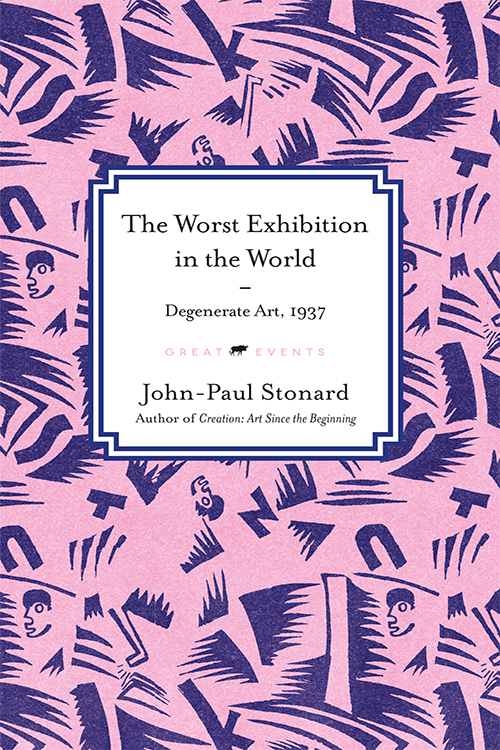
The Nazis’ notorious ‘Degenerate Art’ (Entartete Kunst) exhibition opened in July 1937, occupying nine narrow galleries in a wing of the Hofgarten, Munich. Featuring some 650 works by over 100 artists, the show included the leading lights of modern art, from Kirchner and Kandinsky to Picasso and Mondrian. Confiscated from public museums only weeks before, the artworks were surrounded by derogatory inscriptions, as part of the Nazi propaganda campaign against ‘un-German’ aspects of modern life. One eyewitness account even suggests that actors were hired to perform wild gesticulations of disgust on the gallery floor.
Meanwhile in the nearby Haus der Deutschen Kunst, the first ‘Great German Art Exhibition’ was being held to showcase the blend of realism and kitsch favoured by the Nazi elite.
Entartete Kunst became the most visited exhibition of modern art ever staged, seen by over three million visitors. It marked a pivotal moment when modern art, democracy and totalitarianism collided in spectacular fashion. And in a profoundly ironic twist, far from discrediting modern art, it made the so-called ‘degenerate’ artists still better known, helping to bring them to an international stage.
'An imaginative tour de force… In this terrific short book Stonard walks us into us the stifling galleries, so crowded you are ‘picking a path through a minefield of hate'
—Bel Mooney, Daily Mail
- ‘A worthy and richly illustrated successor to Ernst Gombrich’s fabled The Story of Art’
—Sunday Times on Creation: Art since the Beginning - ‘This bountifully illustrated book is a history of connections … Lucid and thoughtful’
—Independent on Creation: Art since the Beginning - ’Stonard traverses the sweep of human history… His book consists of myriad flashes of brilliance and inventiveness’
—Literary Review on Creation: Art since the Beginning
John-Paul Stonard
John-Paul Stonard completed a PhD at the Courtauld Institute of Art and has published widely in the fields of modern and contemporary art. His books include Creation: Art Since the Beginning, Germany Divided: Baselitz and his Generation and Fault Lines: Art in Germany 1945-55. He is a regular contributor to the London Review of Books, the Times Literary Supplement and Apollo.